Tour Agency in Morocco | Special Holidays Morocco

FEZ

aBOUT THE CITY

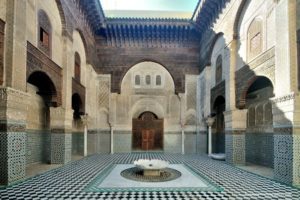
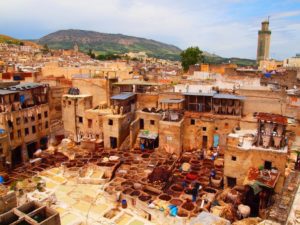
Fez is an Imperial City that has stood in the north of Morocco for a thousand years. Within its sturdy walls you’ll find the place where old Morocco still exists – in the elaborate architecture, the historic medina and the throngs of people that make their home here.

Walk through high walled streets, watch the daily procession of mourners entering the tomb of Fez’s founder Moulay Idriss II, and see the ornate carvings and mosaics on every surface; it’s easy to understand why Fez is called the spiritual heart of Morocco. Time seems to have stopped in large parts of this city, nowhere else can you find such a strong link to the kingdom’s past.

But it’s not a place untouched by modern comforts – there are plenty of five star hotels to stay in and restaurants to eat at. Fez is an inspiring blend of old and new.
selected experiences

top hotels in fez

ACTIVITIES IN FEZ

Enjoy a guided tour of Fez showcasing the alluring charm of the medina, the colorful streets and souks and the rich tapestry of life that exists within its ancient walls. Gain access to ancient palaces and Islamic gardens, venture into the depths of the tanneries, observe weavers at their loom and discover hidden workshops where generations of artisans ply their individual trades and adapt century old techniques to a modern market.

Experience the energy and essence of Fez as it comes to life after dark. Fez by Night tour reveals the captivating appeal of the medina and Ville nouvelle, and the vibrant life that exists within this traditional city. Start from Bab Boujloud, to the Jewish Mellah and through the gold souks to the Kings Palace. Promenade along the boulevards discovering the famous fountains of Fez and soak up the festive atmosphere of Fassis enjoying their own city after sunset.

Lose yourself in the gardens of ancient palaces and exotic Riads perfumed with orange blossoms, citrus, blood red roses and the sweetest jasmine. The tour combines an overview of the fascinating and beautiful world of Moroccan Architecture which showcases all the main ornamentation and decorative techniques from floral motifs, geometry, ceramics to calligraphy, symbolic of the rich cultural heritage of the vast Islamic empire and uncovers the mysteries of the Islamic concept of Chahar-bagh, the four-fold garden and leads us to discover earthly paradise revisited.

This morning enter into the depths of the tanneries, observe weavers at their loom, engage with the copper workers employing traditional design techniques and discover hidden workshops where generations of artisans ply their individual trades and adapt century old techniques to a modern market. This artisanal tour is designed to give you an overview of production methods and step by step explanations as you go beyond the traditional medina tour to delve deeper into the world of the artisans of Fez. Meet the artisans themselves as you gain firsthand knowledge of the materials and the processes involved in their daily work. The tour finishes with a visit to Fez’ new artisanal school and exhibition gallery

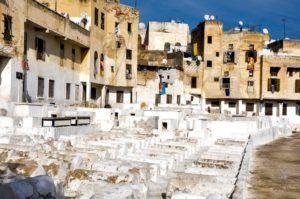
Morocco is home to one of the oldest Jewish communities in the diaspora. It dates back to 2000 years. Its singular Jewish culture is the result of a fusion of varied traditions including Berber, Herbatic, Andalusian, and Arab influences. Fez, the spiritual and cultural capital of Morocco par excellence, leaves its visitors with a unique experience. Fez is the home of Al-Qarawiyeen University the oldest one in the world, where the famous Jewish philosopher Maimonides (Rambam) studied. It is also where the first Mellah, Jewish quartier in Morocco, was established in 1438. This journey to Jewish Fez takes us into a history that shaped Sephardic Judaism, visiting its synagogues, cemetery museum, and taking a walk in its street that once witnessed the presence of the Jewish families and grand rabies, will remind us not only of how Moroccan life was/is like, but also of how was Jewish life in Spain before the expulsion of 1492, as Fez was destination of many of those Jews.  Today there is still a small, but vibrant, Jewish community in Fez with a functioning synagogue, kosher restaurant and a community center.

Morocco is a place where music plays a large part in celebrating religious festivals, marriage and birth. Drums are seen and heard everywhere in Morocco and Fez is the place to make them.

We invite you both to spend a morning in a typical Fondouk(traders workspace) under the watchful eye of a drumming artisan teaching you how to make your own drums. You choose the sound of drum you prefer, pick out the skin, stretch and string your own instrument before painting it in your very own individual design. Finally a professional drummer will teach you how to play the drum Moroccan style so you can impress family and friends on your return.

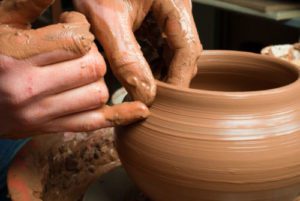
Fez is well-known for the variety and quality of its traditional arts and crafts such, leather, copper embroidery and ceramics. The pottery village of Fez is not to miss. Take a tour in the Village and discover the art of Moroccan pottery through workshops. See the entire process of the craft of Moroccan pottery. It starts with first soaking the clay in water for a week, then kneading it by foot then by hand to create a soft, pliable material. Once the desired shape has been formed, it is set out in the sun to dry.
Take a souvenir with you at the end to remember this unique experience.

One cannot but help notice the different fashions that adorn the streets of the medina, from the western style dress to the more traditional kaftan style jelabas worn by men and women.  This afternoon you will be accompanied by a seamstress through the dress makers’ souk to choose a celebratory kaftan design.  You will need to select your materials, threads and beads from the vast array available in the souk and with your design prepared, have the perfect his and hers kaftans made for you – ready for collection the following day!

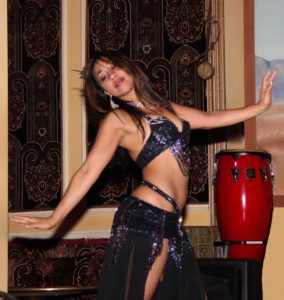
Dance is integral to the culture in Morocco, far more so than it is in the West. Both men and women dance, but it is mainly something done by women. It’s a way of women sharing and being together, and displaying themselves in public in a way they don’t usually do in ordinary life. It is joyous, sensual, and energetic, and is performed mainly at weddings, parties and rituals such as circumcisions and baby naming ceremonies. At these gatherings the women wear beautiful dresses when they dance; long, flowing and colourful, with belts around their waists. Moroccan dance includes aspects of Middle Eastern belly dancing – rotating the stomach is a common element and other styles such as Gnawa (an African ethnic group who became part of the Sufi order in Morocco), where the movements involve jumping and hair tossing and tribal dances from the Amazigh (Berber) regions which vary widely.


In this modern age of new world cosmetics we invite you into the world of ancient beauty secrets and where it all began. Participate in a 5 hour workshop that unearths traditional methods and natural beauty products that can easily be made in your own home by yourself or with friends. Start your day by shopping at the souk el henna to purchase ingredients and gain an overall explanation of the products that can be made from each one. We move on to our workshop, in a Moroccan Dar on the rooftop terrace, a space traditionally reserved for ‘women’s businesses. Sip Moroccan tea as you learn how to make and blend your own rhassoul and we take you through the traditional products including Argan oil, sabun bildi and eau de fleur with step by step instructions so that you understand the properties of the ingredients, how and why they are used and the benefits they each provide. We finish off the workshop with a visit to a medina hammam so that you can employ the techniques that you have learned and absorb yourself into the rituals and culture of the local Moroccan women

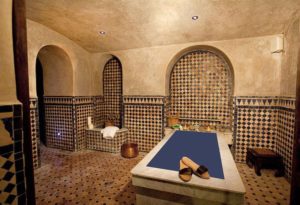
Experience a unique opportunity to connect with locals and be absorbed into Moroccan culture through a visit to one of the traditional hammams in the Fez Medina. We provide a local escort who explains the history, traditions and products and guide you through the steps of this ancient practice. Perhaps finish the day with a “Henna tattoo” for her and “close shaving” for him.


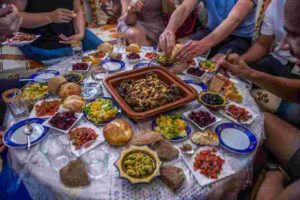
More than traditional Moroccan cooking, this class is a complete immersion into the Moroccan culture and family life. Spending time with our lovely local family in their beautiful riad, you will be encouraged to fully take part in the daily activity of shopping and preparing for a delicious traditional meal. This unique experience will take you to the local medina souk, the bread you make will be baked at the local faran, and your delicious feast will be shared with the family Moroccan style.
Your lesson will entail, shopping for seasonal vegetables and fruit, preserving lemons, making traditional Moroccan salads, bread-baking and the art of making the perfect mint tea – what you make will depend on the seasonal produce and can be decided on prior to your souk visit. 

Find your way through the streets and souks with a local Fez food expert. Start by exploring the fresh food souks, then on to the honey souk to taste an array of delicious honeys, their flavours and properties and find out why honey is so important in Moroccan cooking and Islamic culture. From the honey souk, visit traditional farnatchis, the spice El attarryia and the henna souk. Try traditional Moroccan foods including dried meats, milawi, harsha, briwats, spicy sardines, and fresh goat cheese, finishing off with a visit to a traditional Moroccan tea house.

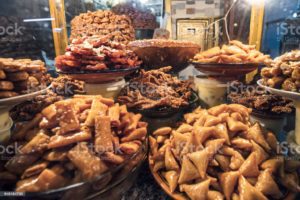
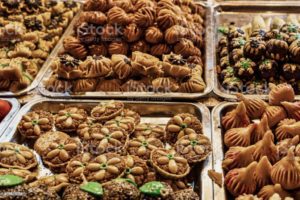
Indulge your sweet tooth and learn how to prepare Moroccan patisseries as well as discovering this important cultural practice. A Moroccan feast is not complete without sweets; in particular, patisseries play an integral role in everyday life in Fez. The ancient city is famous for its diverse and traditional sweets with a multitude available every day at the local souks. Spend the day with a Moroccan family to prepare 4 to 5 different traditional Fassi Moroccan sweets.

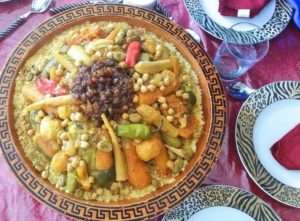
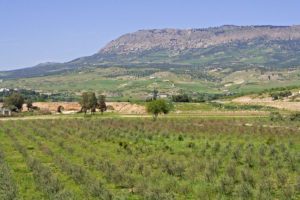
Here we begin to head away from Fez and out East to Ribat El Kheir. Enjoy the beautiful scenery of the Atlas foothills en route to get to the town surrounded by mountains and lush agriculture.Start learning the secrets of a good Moroccan couscous while at the same time experiencing traditional rural life.  Visitors roll their own couscous from scratch with the women of the association and then cook and eat it for lunch.  After lunch take a walk along the ridge to see the donkey-powered olive press and have mint-tea and an olive oil tasting with the owner. In the afternoon head back to Fez. 

Depart Fez for the Middle Atlas Mountains to visit one of Morocco’s leading boutique fromagerie’s, La Pommerai. The private property is one of the first to be officially certified organic in the region and is set against a backdrop of apple and orange orchids.  Taste exquisite, hand-crafted and artisanal cheeses and olive oils which are cold pressed as well honey raised and processed into a variety of pure honey. Here we’ll have a Dada on hand (female cook), who’ll be teaching us how to make khobz(Moroccan bread) in a traditional clay faran. A delicious meal of farm produce will be served, along with our own homemade breads and the local cheeses.

Mount Zalaghs’ peaks and slopes can be easily seen from Fez Medina and yet whilst only half an hour travels by car, the tranquillity and natural beauty of Mt Zalagh is a world away from the bustle of Fez. Short treks will take you through surrounding forests of pine, cedar, fig, almond and olive orchards to visit local homes and farmsteads. Here you will experience not only the warmth and friendliness of this mountain people, but also see the beauty and simplicity of the traditional Berber adobe/pise architecture. A picnic lunch will be provided, Berber style, and we have no doubt that this will prove to be a most memorable excursion to a world so near and yet so far from the Medina of Fez. 


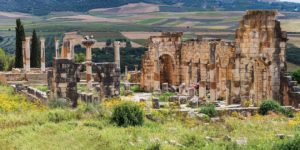
This morning depart for Fez via Moulay Idriss and the ancient Roman ruins of Volubilis, a day spent in the past, seeing ancient architecture and eating age old recipes, a feast fit for Anthony and Cleopatra themselves! Find beautiful mosaic floors, uncovered and brought to light by the archaeologists that work this partly excavated site. It was developed from 3rd century BCE onwards as a Phoenician and later a Carthaginian settlement. The town fell to local tribesmen in 285 and was never recovered by the Roman Empire. Constantly uncovering this city beneath the sands of time, now exclusively a Moroccan project runs by Moroccan archaeologists. Following a tour of this stunning historic site from the 3rd century BC and its many intact and colourful mosaics, enjoy the tranquillity of a local farm in the shadow of the ancient ruins while sampling traditional Roman recipes as recorded in the Latin texts of Apicius and Cato.

This morning cycle towards Bhalil, a tranquil town is located at the foot of the Jebel Kandar which offers visitors spectacular views of the town and the landscapes surrounding it and is most notably known for its modern day cave dwellers.  (Option exists here of organizing morning tea with locals). From Bahlil we move on to Immouzer, particularly beautiful in spring with apple blossom and a lively place to be in July with the Pommes de Fete. Becoming increasingly known as a region for cheese production we’ll stop off at La Pommeraie.  The private property is one of the first to be officially certified organic in the region and is set against a backdrop of apple and orange orchids.  The cheeses here are exclusive to Morocco’s leading luxury hotels & restaurants. Here we’ll sample the cheeses and enjoy a BBQ lunch before setting back to Fez.


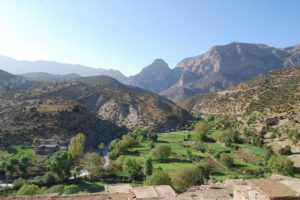
The Middle Atlas region offers many hidden delights including spectacular views of cedar and cork forests and delightful & hilarious Barbary apes. A short hike into the cedar forests with a mountain guide to participate in the Monkey Watch programme. Enjoy the crystal air of the mountains while you discover the rustic Berber towns of Immouzer, Ifrane and Azrou.


Contact us

info@specialmorocco.com

07 rue Tarablous, QI 80000
AGADIR, MOROCCO

phone call

+212 698 193 183
( MOROCCO )

some frequently asked questions

Morocco is one of those types of destinations that can be visited year-round. You have to understand the geography of the country in order to choose the best time to visit Morocco. Taking into account that you have vast desert regions, probably those should not be visited during the peak summer months such as July and August.

Also, knowing that Morocco has most part of its territory with mountains above 10.000 feet and up to 14.000, you will surely encounter snow in highlands above 4200 feet. So, expect snow during the months of November until February. Overall we can say that Morocco is amazing and can be visited from January until December, but the ultimate best times to visit Morocco are during April, May, September, October, and November.

Tourists have been visiting Morocco for years and Moroccans have well-earned reputation for warmth and kindness toward visitors. Moroccan cities are generally very safe, especially in area where tourists frequent. Morocco is very well secured, Police in every location, there is so many checking points, this is what makes Morocco safe and 100% secured to make sure everybody are safe and comfortable in Morocco. Morocco generally has a very low crime rate. Travelers will be safe in Morocco if they take sensible precautions that would apply to any tourist destination around the world.

Travel insurance should be obtained before leaving your country of origin. It is not compulsory to purchase it. Local hospitals have limited diagnostic capability. Private clinics can be expensive, evacuation can cost a lot, luggage can disappear, so insurance is a good idea.

You can relax and wear whatever is familiar, comfortable, and best suited for you during your holidays. Morocco is very tolerant and welcoming to visitors, and you’re not expected to act or look like a Moroccan. Longer shorts and shirts are fine for men. Concerning women, it’s a good idea to bring a scarf to cover bare shoulders and arms in rural areas.

It’s not easy to get Moroccan Dirham outside the country as it is a closed currency. Those who succeeded have paid heavy commissions for banks.

There are ATMs everywhere in the country, exchange points, banks, and many businesses/shops/restaurants nowadays accept cards mostly with a 5% transaction fee. The best place to exchange money with high rate is the touristic areas.

The Moroccan Dirham (MAD) is the currency of Morocco. Made up of 100 centimes per unit, the currency is issued by the Bank Al-Maghrib (Morocco’s central bank). Historically, the Moroccan Dirham originates from the Byzantine Empire’s Drachm, and was used in Arabia and the Levant in pre-Islamic times. The name “Dirham” stems from the Roman word “denarius” .

Credit cards are widely used in Morocco in hotels, many shops, restaurants, and cafes. Most stores in markets accept credit cards. The most common types of credit cards used in Morocco are Visa, Master Card, and American Express.

Visitors to Morocco must have a passport valid for at least 6 months beyond the scheduled return date to enter Morocco and you can obtain a visa from Morocco Consulate before departure. Also, entry visa is available upon arrival Morocco airports against USD 27 per passport for specific nationalities and need to check before.

Some nationalities don’t need a visa to visit Morocco for the purpose of tourism for up to 3 months such as United States of America, Canada, United Kingdom, Australia, Denmark, Netherlands, New Zealand, and Switzerland. For more info and details on entry visa to Morocco please check with the Moroccan consulate or embassy at your country

 It is always recommended for travelers who wish to have their own supply of cigarettes and alcohol with them in Morocco to purchase them upon arrival.

There are duty free shops in the airports in Casablanca, Marrakech, Agadir, Fez, Tangier and Rabat. Tourists are allowed to purchase up to 3 liters of alcohol and up to 200 cigarettes on arrival.

English and French are studied in school all over Morocco. This is why most Moroccans, who live in the cities, speak or understand at least some English words or phrases, and most of Moroccans are speaking French well. Fewer Moroccans can speak Italian, Spanish, and German; however, professionals in the tourism sector are accustomed to visitors who cannot speak Arabic. They speak enough English and many other languages to fulfill the needs of most travelers. Many travelers enjoy their stay in Morocco without learning a single word of Arabic; however, it is always good to learn a few Arabic words to expressing greetings or thanks. If you are planning to visit some places other than popular tourist destinations, it is advisable to learn some Arabic phrases. Generally, Moroccans are friendly and are happy to help anyone, especially foreigners and tourists, even if there is a language barrier.

Many people in the tourism sector depend on tips, as a major part of their income. Therefore, tipping is considered customary in Morocco. It is a customary attitude for expressing ones satisfaction of good services rendered to him by staff on duty with him. We advise if you are willing to offer it, this would be great and if not, you are not obliged to do it.

– The same as many hotels all around the globe, the check-in time in most hotels in Morocco is around midday, 1 or 2 PM. If you arrive in the hotel late at night or in the early morning, you may have to pay for an extra night to get to your room immediately without having to wait until the normal check-in time.

Accommodations for travellers in Morocco fall across a broad range—everything from world class luxury to simple hostel accommodations are available. The nicest hotels compare well with luxury hotels anywhere, coming from international hotel chains like Movenpick, Hilton, Four Seasons, and Sofitel. A step down from these is a variety of local hotels that ranges from luxurious to simple. Moroccan hotels have their own rating system that loosely classifies them on a 5-star scale; however, this scale is different from international standards used elsewhere.

Moroccans are well known all over the world for their tolerance and hospitality; however, it is always polite to ask permission before taking a photograph of people, especially women, and stores or products. Photography is non-permitted around army bases, airports, dams and bridges. In most places where photography is prohibited there will be signs to notify you.

Non-Muslims are generally welcome to visit and access Hassan 2 mosques in Casablanca except when they are being used for prayer, on Friday and during the five prayers of the day. Tourists are not allowed to enter any other mosque at any time. Only outside visit is possible.

Most of the monuments, historical sites, and museums in Morocco open from 9 AM until 6 PM. During Ramadan, the holy month of the Islamic calendar, be aware that these hours will change significantly.

Most of the shops in Morocco open from around 9 AM and stay open until 10 PM; however, many shops, cafes, and restaurants especially in main cities like Marrakech, Casablanca, Fez, Agadir, and Rabat stay open much later and some facilities and shops are open 24 hours a day in touristic areas. During Ramadan, the holy month of the Islamic calendar, opening hours may change significantly with shops closed during the middle of the day and staying open much later. Medina Souk in Fez closes Friday Morning.

There is a public transit system in Morocco that uses a rail to link the main towns and buses for inner-city trips. Small private and group tours will typically use large vans and sedans. Medium to large motor coaches is used for larger group holidays.