Tour Agency in Morocco | Special Holidays Morocco

MARRAKECH

aBOUT THE CITY

Marrakech has stood for close to a thousand years, a city of history and culture.

One of the most evocative places in the world, just the name conjures up images of this cultural melting pot – sandstone buildings, dusty streets and towering minarets against deep blue skies immediately spring to mind.

Known as The Red City thanks to the hue of the thick walls surrounding the old city, Marrakech has been a popular tourist destination in Morocco since the 1960s, attracting everyone from the Beatles to Sienna Miller. It’s a place to engage the senses, nowhere more so than in the famous souks. These vibrant markets are a whirlwind of colour and noise, where crowds of people weave between tightly packed stalls exhibiting pyramids of brightly coloured spices, richly woven rugs and a thousand other goods. 

Walking through Marrakech for more than five minutes is almost impossible without finding some architectural wonder to marvel at. From the exquisite gardens to the intricately carved archways to the ornate mosques, this city displays its history in its environment. The Medina, in particular, is a sight to behold: designated a UNESCO World Heritage Centre, it’s a wonderful mix of Amazigh, Arabic, and Moorish architecture.

selected experiences

top hotels in marrakech

ACTIVITIES IN Marrakech

Start your day with a Private Guided Tour at Les Jardin Majorelle, the French painter Jacques Majorelle (1886 – 1962) dedicated forty years of his life to the creation of the luxurious gardens and Berber museum. An amateur botanist, Majorelle included plants from all five continents in the gardens. Marjorelle’s studio, a Cubist style villa constructed by architect Paul Sinoir, has since been transformed into the museum, and is painted a vibrant blue. The garden covers two and a half acres, and was opened to the public in 1947. The garden has been open to the public since 1947. Since 1980 the garden has been owned by Yves Saint-Laurent and Pierre Bergé. After Yves Saint Laurent died in 2008 his ashes were scattered in the gardens. The garden also houses the Islamic Art Museum of Marrakech, whose collection includes North African textiles from Saint-Laurent’s personal collection as well as ceramics, jewelry, and paintings by Majorelle.

Rocco Orlacchio of Voice Gallery offers a private showing as well as a visit to the Atelier of a well renowned Artist in Residence Eric Van Hoven. Rocco sits on the board of the Marrakech Biennale and is the prefect ambassador to shed light on the Moroccan art scene. Voice Gallery showcases local and international, mainly young artists, who come together create and collaborate with each other, extending boundaries and exchanging ideas annuitizing the culture and landscape of Morocco to inspire their artistic endeavors.

Calligraphy means “beautiful writing” and Arabic calligraphy (or more properly, Islamic calligraphy) is considered a high art form in the Arab world and is increasingly gaining recognition and appreciation worldwide.

Abdeljalil conducts calligraphy workshops to share his passion with others. Whether you ask him about history or more practical information such as the ink or the pens, he will not skimp on precious information that may just leave you speechless. Patient and devoted, he will also teach you how to write the alphabet, your name and help you become familiar with calligraphy. After all, his life motto is “Make a living from a passion”.

Private Cooking Lesson is at Le Maison Arabe. The workshops are conducted by a dada (traditional Moroccan cook) or a chef from our Moroccan restaurant, using easy-to-use modern equipment found in everyday kitchens. At the end of each workshop, participants dine on the meal they have prepared. At a typical half-day workshop, one learns to prepare an appetizer and a main dish, or a main dish and dessert.

Tasting Marrakech is a tailor-made food and cultural experience that takes place in the famous Jemaa el Fna square in the company of a state-approved guide and a foodie expert. The tour is private and customized to your appetite and palate. Dine with the locals while sampling regional specialities at the most popular food stalls in the market while soaking up the night-time ambiance in the famous square.

 Once you have had the opportunity to try the various street foods, we then take over a local restaurant close to the Jma El Fna and re-create what we’ve tried en route!

Start your day trip with a wine degustation at Val Du Argan, one of the leading wineries in the south of Morocco.

Moroccan-French born Charles Mélia, owner/winemaker, moved to France to manage his family’s property in Cotes Du Rhone at young age before turning back in his late 40’s to make wine in his motherland. His vineyard began with ­five tentative hectares planted in 1994 and now extended to 40, and still remains the only winery situated on the southern coastal part of Morocco. His boutique wines are now a reference point for the Moroccan wine industry.

Following the wine tasting stop en route for a cheese tasting and lunch at La Fromagerie where Jaouad Hbib and Abderrazzak Khoubbane run a seriously good dairy. The cheeses are made from old Berber techniques and each cheese reflects the unique vision of the farm in offering bio-made produce at high quality levels.

Drift gently over the fantastic desert landscape and capture the sunrise while floating over secluded Berber villages and the snow-capped Atlas Mountains on this magical balloon flight. Rides are available with groups or can be arranged privately with champagne breakfasts following the flight for that extra special occasion.

Enjoy a fantastic experience with gentle and well-trained horses riding through the local Berber Villages. All levels are catered for as the guide will adapt to your riding experience.

The Moroccan tradition of Hikayat, or storytelling dates back almost 1, 000 years. Some stories were recorded and other stories are passed orally. This form of entertainment was found in cities throughout Morocco but today Marrakech’s Jemaa El Fna square is the only city that’s keeping this tradition alive. This evening enjoy a private session of this dying artin the comfort and peace of your hotel with the master Storyteller Ahmed Ezzarghani in both Arabic and English before dinner.

The Middle Atlas region offers many hidden delights including spectacular views of cedar and cork forests and delightful & hilarious Barbary apes. A short hike into the cedar forests with a mountain guide to participate in the Monkey Watch programme. Enjoy the crystal air of the mountains while you discover the rustic Berber towns of Immouzer, Ifrane and Azrou.


Head this morning to visit the village of Imlil at the base of Jebel Toubkal. Choose to explore on foot or by mule to visit some of the surrounding Berber villages to look at some of the working co-operatives. These co-operatives, set up through independent and government funding allow the women of the region to support themselves and be sustainably independent, as well as providing the opportunity for literacy education.  Experience traditional rural life with local women and roll your own Couscous then enjoy the meal that you will all share together in a true Moroccan style.


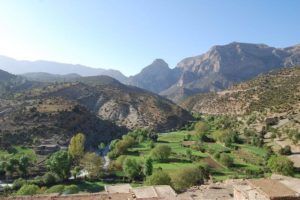
Earlydeparture from Marrakech   heading to the direction of Damnate and its beautiful fields of olive trees. After driving towards the natural bridge of ImiNifrid you will stop for a mint tea and enjoy the view. All this road is unique by its greenish valleys and amazing scenarios. You will have plenty of chances of taking photos. Visit of a traditional water mill in the region. Berber lunch near the waterfalls. Return to Marrakesh in the evening after a wonderful day out of Marrakech.


Contact us

info@specialmorocco.com

07 rue Tarablous, QI 80000
AGADIR, MOROCCO

phone call

+212 698 193 183
( MOROCCO )

FREQUENTLY ASKED QUESTIONS

Morocco is one of those types of destinations that can be visited year-round. You have to understand the geography of the country in order to choose the best time to visit Morocco. Taking into account that you have vast desert regions, probably those should not be visited during the peak summer months such as July and August.

Also, knowing that Morocco has most part of its territory with mountains above 10.000 feet and up to 14.000, you will surely encounter snow in highlands above 4200 feet. So, expect snow during the months of November until February. Overall we can say that Morocco is amazing and can be visited from January until December, but the ultimate best times to visit Morocco are during April, May, September, October, and November.

Tourists have been visiting Morocco for years and Moroccans have well-earned reputation for warmth and kindness toward visitors. Moroccan cities are generally very safe, especially in area where tourists frequent. Morocco is very well secured, Police in every location, there is so many checking points, this is what makes Morocco safe and 100% secured to make sure everybody are safe and comfortable in Morocco. Morocco generally has a very low crime rate. Travelers will be safe in Morocco if they take sensible precautions that would apply to any tourist destination around the world.

Travel insurance should be obtained before leaving your country of origin. It is not compulsory to purchase it. Local hospitals have limited diagnostic capability. Private clinics can be expensive, evacuation can cost a lot, luggage can disappear, so insurance is a good idea.

You can relax and wear whatever is familiar, comfortable, and best suited for you during your holidays. Morocco is very tolerant and welcoming to visitors, and you’re not expected to act or look like a Moroccan. Longer shorts and shirts are fine for men. Concerning women, it’s a good idea to bring a scarf to cover bare shoulders and arms in rural areas.

It’s not easy to get Moroccan Dirham outside the country as it is a closed currency. Those who succeeded have paid heavy commissions for banks.

There are ATMs everywhere in the country, exchange points, banks, and many businesses/shops/restaurants nowadays accept cards mostly with a 5% transaction fee. The best place to exchange money with high rate is the touristic areas.

The Moroccan Dirham (MAD) is the currency of Morocco. Made up of 100 centimes per unit, the currency is issued by the Bank Al-Maghrib (Morocco’s central bank). Historically, the Moroccan Dirham originates from the Byzantine Empire’s Drachm, and was used in Arabia and the Levant in pre-Islamic times. The name “Dirham” stems from the Roman word “denarius” .

Credit cards are widely used in Morocco in hotels, many shops, restaurants, and cafes. Most stores in markets accept credit cards. The most common types of credit cards used in Morocco are Visa, Master Card, and American Express.

Visitors to Morocco must have a passport valid for at least 6 months beyond the scheduled return date to enter Morocco and you can obtain a visa from Morocco Consulate before departure. Also, entry visa is available upon arrival Morocco airports against USD 27 per passport for specific nationalities and need to check before.

Some nationalities don’t need a visa to visit Morocco for the purpose of tourism for up to 3 months such as United States of America, Canada, United Kingdom, Australia, Denmark, Netherlands, New Zealand, and Switzerland. For more info and details on entry visa to Morocco please check with the Moroccan consulate or embassy at your country

 It is always recommended for travelers who wish to have their own supply of cigarettes and alcohol with them in Morocco to purchase them upon arrival.

There are duty free shops in the airports in Casablanca, Marrakech, Agadir, Fez, Tangier and Rabat. Tourists are allowed to purchase up to 3 liters of alcohol and up to 200 cigarettes on arrival.

English and French are studied in school all over Morocco. This is why most Moroccans, who live in the cities, speak or understand at least some English words or phrases, and most of Moroccans are speaking French well. Fewer Moroccans can speak Italian, Spanish, and German; however, professionals in the tourism sector are accustomed to visitors who cannot speak Arabic. They speak enough English and many other languages to fulfill the needs of most travelers. Many travelers enjoy their stay in Morocco without learning a single word of Arabic; however, it is always good to learn a few Arabic words to expressing greetings or thanks. If you are planning to visit some places other than popular tourist destinations, it is advisable to learn some Arabic phrases. Generally, Moroccans are friendly and are happy to help anyone, especially foreigners and tourists, even if there is a language barrier.

Many people in the tourism sector depend on tips, as a major part of their income. Therefore, tipping is considered customary in Morocco. It is a customary attitude for expressing ones satisfaction of good services rendered to him by staff on duty with him. We advise if you are willing to offer it, this would be great and if not, you are not obliged to do it.

– The same as many hotels all around the globe, the check-in time in most hotels in Morocco is around midday, 1 or 2 PM. If you arrive in the hotel late at night or in the early morning, you may have to pay for an extra night to get to your room immediately without having to wait until the normal check-in time.

Accommodations for travellers in Morocco fall across a broad range—everything from world class luxury to simple hostel accommodations are available. The nicest hotels compare well with luxury hotels anywhere, coming from international hotel chains like Movenpick, Hilton, Four Seasons, and Sofitel. A step down from these is a variety of local hotels that ranges from luxurious to simple. Moroccan hotels have their own rating system that loosely classifies them on a 5-star scale; however, this scale is different from international standards used elsewhere.

Moroccans are well known all over the world for their tolerance and hospitality; however, it is always polite to ask permission before taking a photograph of people, especially women, and stores or products. Photography is non-permitted around army bases, airports, dams and bridges. In most places where photography is prohibited there will be signs to notify you.

Non-Muslims are generally welcome to visit and access Hassan 2 mosques in Casablanca except when they are being used for prayer, on Friday and during the five prayers of the day. Tourists are not allowed to enter any other mosque at any time. Only outside visit is possible.

Most of the monuments, historical sites, and museums in Morocco open from 9 AM until 6 PM. During Ramadan, the holy month of the Islamic calendar, be aware that these hours will change significantly.

Most of the shops in Morocco open from around 9 AM and stay open until 10 PM; however, many shops, cafes, and restaurants especially in main cities like Marrakech, Casablanca, Fez, Agadir, and Rabat stay open much later and some facilities and shops are open 24 hours a day in touristic areas. During Ramadan, the holy month of the Islamic calendar, opening hours may change significantly with shops closed during the middle of the day and staying open much later. Medina Souk in Fez closes Friday Morning.

There is a public transit system in Morocco that uses a rail to link the main towns and buses for inner-city trips. Small private and group tours will typically use large vans and sedans. Medium to large motor coaches is used for larger group holidays.