Wind Power: Rabat prepares for a scale-up
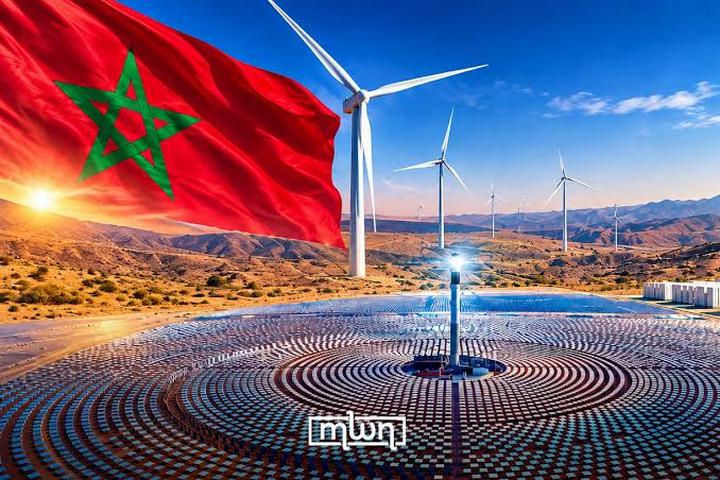
Morocco confirms its positioning among the leading wind energy markets in Africa. With an installed capacity of 2.2 gigawatts (GW), the Kingdom ranks third on the continent, behind South Africa (4.2 GW) and Egypt (3.2 GW), according to a recent report by the Global Wind Energy Council, relayed by the Washington-based Energy Research Unit. Together, Morocco, South Africa, and Egypt account for more than 85% of the installed wind capacity on the continent, illustrating the high concentration of this sector around three driving markets. The Kingdom relies in particular on a local currency financing model, comparable to that of South Africa, which mobilizes national banks and pension funds. This lever helps limit project exposure to currency fluctuations while promoting the mobilization of domestic capital. African wind power recorded a record level of new installations in 2025, with an additional 1.53 GW. The continent’s total capacity thus reached 11.1 GW at the end of 2025, up from less than 9 GW in 2023. Yet, the technical potential for onshore wind remains considerable. Estimated at 58.4 terawatts, it remains largely untapped. Beyond the three dominant markets, several countries, including Kenya, Ethiopia, Tunisia, Senegal, and Mauritania, are beginning to develop their capacities.
Furthermore, the continent counts 259 planned projects, representing 186 GW. However, their realization will depend on available financing, transport infrastructure, and the capacity of power systems to integrate this new production. The report estimates that installed wind capacity in Africa could reach between 30 and 50 GW by 2035, with expected growth in Morocco, where it could reach between 5 and 8 GW.
The grid: a critical link in the transition
However, growing production capacities are not enough to guarantee an effective energy transition. As wind power gains momentum in the electricity mix, the issue is gradually shifting from production to the system’s ability to transmit, balance, and optimize this energy. A wind farm can produce abundantly during a windy night when demand remains low. Conversely, its production can decrease just as consumption starts rising again.
For this energy to be fully useful, it must be transported from production areas to consumption hubs, power variations must be anticipated, flows balanced, and congestion prevented. The difficulty is further compounded by the fact that the best wind resources are not necessarily located near major consumption centers. The grid must therefore absorb fluctuating volumes, sometimes over long distances, while preserving system stability and continuity of supply. “The main bottleneck today is at the grid level,” summarizes Badr Ikken, Executive President of Gi3 and President of the Morocco-Germany Business Council at the CGEM. With the ramp-up of renewable energies, “evacuation capacity, system stability, and real-time management become critical,” he emphasizes. The challenge is therefore no longer just to produce more green electricity, but to have the necessary infrastructure to integrate it without compromising the balance of the electrical system.
Storage, flexibility, and sector complementarity
Strengthening the grid does not mean slowing down the deployment of new wind capacities, but accompanying their development with an integrated approach. Storage constitutes one of the essential levers, with solutions adapted to different needs: batteries for rapid balancing, pumped storage power stations to store electricity over several hours, and then green hydrogen and its derivatives to capture value from larger volumes, subject to their economic competitiveness.
In addition to these solutions, demand flexibility plays a role. Demand-side management, particularly in industry, can allow certain uses to be shifted to periods of high renewable production and reduce imbalances between supply and demand. “Demand-side management, especially for industry, can become a powerful flexibility tool,” says Badr Ikken. Complementarity between wind and solar represents another axis of development. By combining production sources with different profiles, the system can better distribute production over time, without however bypassing grid reinforcement and storage. For the expert, “the challenge is not to choose between wind, solar, or another source, but to build a coherent and efficient energy system.”
Industrial demand could also accelerate the development of new projects. Mines, cement plants, foundries, and fertilizer manufacturers are among the consumers likely to back renewable electricity supply contracts. In the most advanced markets, power purchase agreements (PPAs) concluded directly with corporate buyers could account for 50 to 70% of new installed capacities. Developers are also turning toward hybrid solutions combining wind, solar, and batteries, especially for installations exceeding 100 MW intended for industrial customers.
Challenges for Morocco
With a capacity likely to reach between 5 and 8 GW by 2035, Morocco enjoys significant growth prospects. But the realization of this trajectory will depend as much on the pace of investment as on the ability of the electrical system to absorb the new production. Financing in dirhams can help mobilize domestic resources, while grid modernization, storage development, and the adaptation of consumer usage must accompany the sector’s ramp-up.
The report identifies several determining conditions: power purchase agreements solid enough to guarantee project bankability, regular bidding schedules, local currency financing, the development of transmission grids ahead of new capacities, and stable regulatory frameworks. Added to these requirements are risks related to insecurity in the Sahel, global supply chain disruptions, and uncertainties surrounding the European Carbon Border Adjustment Mechanism (CBAM).
The challenge now consists in advancing production at the same pace as transmission infrastructure, storage solutions, and flexibility mechanisms. The success of the wind transition will not be measured solely by the installed gigawatts, but by the electrical system’s capacity to optimize this energy at the right time and sustainably meet the needs of the economy